Finding the Best Trusted Writing Journals for Your Daily Practice
Why the Right Notebook Still Matters
After more than twenty years of filling notebooks with drafts, ideas, and morning pages, I have come to appreciate how much the right journal matters. It is not just about having paper to write on. The feel of the page under your hand, the way ink behaves, the binding that lies flat or fights you - these small details shape how often you write and how freely you write. Over the years I have tested dozens of options, from cheap spiral notebooks to hand-stitched leather journals. The ones I keep coming back to are what I now call my trusted writing journals - the ones that never let me down, no matter the project or the mood.
When people ask me where to start, I always tell them to think about what they actually need. A writer who works mostly in coffee shops needs something different from someone who writes only at a desk. A poet might prefer a tiny pocket book, while a novelist needs room for long scenes. The idea of a single best journal is a myth. But there are a few brands and designs that have earned a reputation through consistency and quality. These are the ones I recommend after years of notebook reviews, both my own and those shared by other writers in forums and workshops.
Paper Quality and Ink Behavior
The most important feature of any journal is the paper. I learned this the hard way after buying a beautiful-looking notebook that bled through with every fountain pen stroke. Tomoe River paper is widely considered the gold standard for writers who use pen and ink. It is thin, almost translucent, but handles ink better than any other paper I have tried. Ghosting is minimal, and feathering is almost nonexistent. Both Hobonichi Techo and many Midori MD notebooks use Tomoe River paper, which is why they appear so often in discussions about trusted writing journals.
Rhodia paper is another excellent choice, especially if you prefer a slightly thicker page with a smooth, coated finish. The orange covers and black binding are instantly recognizable. Rhodia notebooks are popular among fountain pen users because the paper is resistant to bleed-through and shows shading beautifully. If you use a Lamy Safari or a Pilot G2, Rhodia paper brings out the best in both. I have filled several Rhodia pads with drafts and notes, and I have never had a problem with ink spreading or smudging.

For those who prefer a more textured feel, Midori MD notebooks offer a cream-colored paper that is soft and inviting. The binding is simple and durable, and the notebooks lie completely flat when open. That flatness matters more than you might think. When you are in the middle of a long writing session, a notebook that keeps trying to close is a constant irritation. Midori MD avoids that problem entirely.
Size and Portability
Size is another factor that can make or break a journaling habit. I have a shelf full of beautiful A5 notebooks that I rarely use because they are too big to carry around. The notebooks I reach for most are pocket-sized or just a little larger. Field Notes notebooks are perfect for this. They fit in a jacket pocket or a small bag, and the covers are sturdy enough to survive being thrown around. I use Field Notes for quick notes, observations, and ideas that come up during the day. They are not ideal for long-form writing, but they are indispensable for capturing moments before they disappear.
On the other end of the spectrum, the Hobonichi Techo is a cult favorite among daily journalers and bullet journal enthusiasts. Its A6 size is compact but still gives you enough space for a full page of writing each day. The Tomoe River paper inside is incredibly thin, which keeps the book slim even though it has 365 pages. Hobonichi also offers a Cousin version in A5 for those who want more room. Both versions have become staples in the world of trusted writing journals because they combine thoughtful design with exceptional paper.
Binding and Durability
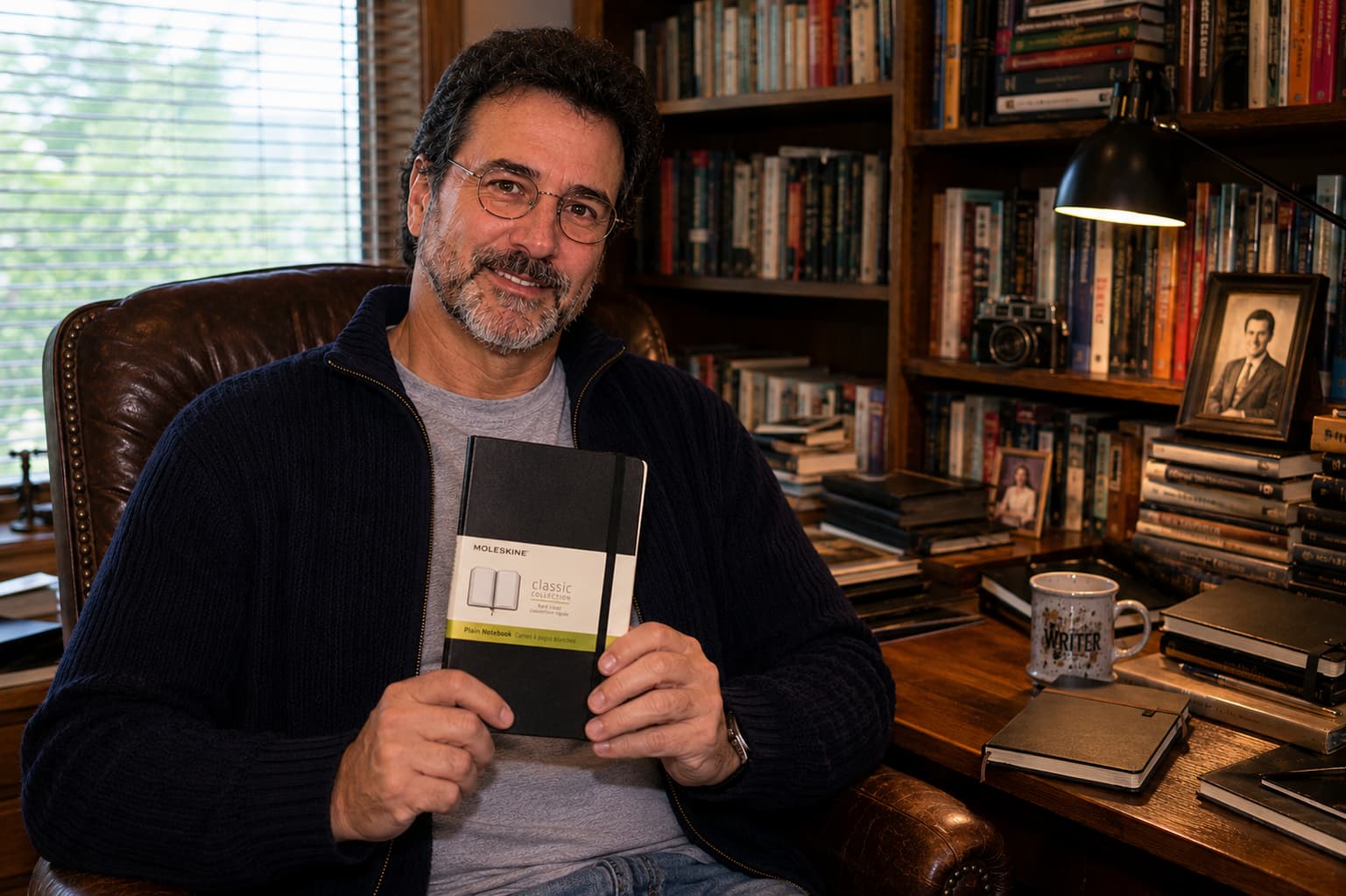
How a notebook is bound affects how long it lasts and how pleasant it is to write in. Moleskine notebooks are perhaps the most famous brand in this space, and for good reason. They have a classic look, an elastic closure, and a back pocket that can hold loose papers. However, their paper quality has declined in recent years. Many writers, myself included, have found that fountain pens and even some gel pens bleed through Moleskine pages. For ballpoint pens or pencils, Moleskine works fine. But if you use a fountain pen or a bold rollerball like the Uni-ball Jetstream, you may want to look elsewhere.
Leuchtturm1917 notebooks are a strong alternative. They have numbered pages, a table of contents, and an expandable back pocket. The paper is thicker than Moleskine and handles most pens well, though it is not as good as Tomoe River or Rhodia for fountain pens. Leuchtturm1917 is especially popular among bullet journalists because of the built-in organization features. The notebooks come in many colors and sizes, including a pocket version and an A5 plus size. I have used Leuchtturm1917 for several projects and found them reliable for everyday writing with gel pens and rollerballs.

Writing Tools Matter Too
The journal is only half the equation. The pen you use changes how the writing feels. I have settled on a few favorites after years of testing. The Lamy Safari is a workhorse fountain pen that writes smoothly and comes in many colors. It is affordable enough that you can buy several and keep them inked with different colors. The Pilot G2 is a gel pen that flows consistently and dries quickly. It works on almost any paper and is great for writers who want a reliable, no-fuss tool. The Uni-ball Jetstream is another excellent option, especially for those who like a fine line and quick drying time. Pairing one of these pens with a good journal makes the act of writing more enjoyable, which in turn makes it more likely that you will keep writing.
Overcoming Writer's Block with the Right Approach
Even the best journal cannot cure writer's block on its own. But the right setup can make it easier to push through. I have found that using journaling prompts helps when the page feels blank and intimidating. Simple prompts like "What am I avoiding?" or "Describe the last thing that made me laugh" can get words moving. Julia Cameron, in her book The Artist's Way, recommends writing three pages every morning, longhand, without stopping or editing. This practice, known as morning pages, has helped countless writers break through creative blocks. The key is to write without judging what comes out. The quality of the writing does not matter. What matters is the act of filling the page.
I have done morning pages on and off for years, and I can say that the ritual itself is more important than the notebook. But having a journal that feels good in your hands makes it easier to show up every day. That is why I always encourage writers to invest in a notebook they genuinely like. It does not have to be expensive. But it should be something you look forward to opening.
Where to Find Trusted Writing Journals
If you want to buy a quality journal, Amazon is a convenient option for most brands. You can find Moleskine, Leuchtturm1917, Rhodia, and Field Notes there with fast shipping. For more specialized options like Hobonichi Techo and Midori MD, Etsy has many small shops that import these notebooks and offer customization. Some sellers on Etsy also bind their own notebooks using Tomoe River paper, giving you access to unique covers and layouts. I have bought several notebooks from independent makers on Etsy, and the quality has been consistently good.
When shopping, pay attention to the paper weight and whether the notebook is fountain pen friendly. Many product descriptions mention this, and reviews from other writers can be very helpful. I have wasted money on notebooks that looked beautiful but bled through on the first page. Now I always check the paper specifications and read a few notebook reviews before buying. A little research upfront saves frustration later.
Final Thoughts on Building Your Writing Practice
The best journal is the one you actually use. That sounds simple, but it is easy to forget when you are comparing paper types and binding styles. I have a drawer full of notebooks that were bought with good intentions and never finished. The ones that get filled are the ones that fit my routine and my preferences. For me, that means a Midori MD A5 for long-form writing, a Field Notes pocket notebook for daily notes, and a Leuchtturm1917 for bullet journaling. Together, they form a system that works.
If you are new to journaling or looking to improve your practice, start with one good notebook and one good pen. Write in it every day for a month, even if it is just a few lines. Pay attention to how the combination feels. Over time, you will develop your own list of trusted writing journals - the ones that disappear in your hand and let the words flow. That is the real test. Not the brand name or the price, but how it feels to write in it day after day.